INDIANENFLUIT - SIYO TANKA -
NATIVE AMERICAN STYLE FLUTE - LAKOTA FLUTE - LOVE FLUTE
Native American
Flute history tells the story of courting, prayer and meditation. Flutes
were used for different reasons within tribes. Todays flutes are finely
crafted instruments, yet easy to play. One must be careful when purchasing
a flute ... it has to be made in the right way, with a good heart and
much prayer. A flute made in the right way will sing with a sweet spirit."
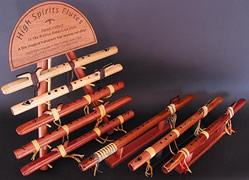
"HIGH SPIRITS" FLUTES
Each "High Spirits" Native American style flute is made from a solid piece of the finest cedar, walnut, birch, maple and other fine domestic plantation-grown woods or recycled lumber, finished with three coats of a non-toxic hardening oil for durablity and clarity of sound. Each Native American flute is precision-tuned so that it will blend perfectly with other instruments. Lovely crafted. All Cedar or Walnut wood flutes also available with turquoise inlayed.
Each "High Spirits" Native American style flute (except Pocket Flutes and Eagle Bone Flute) includes a FREE "Instructional DVD", instructional book and fingering charts. Made in US.
Aromatic Cedar, Birch, Spanish Cedar or Walnut? Aromatic Cedar has the finest sound quality in the softwood family. These soft grain woods generate a warm mellow voice. In the hardwood family Walnut has an exceptional tonal quality. The sound waves traveling through the tight grain of these woods create a clear full voice. The added advantage to hardwoods is durability.
listen
to the Native American flute
SINGLE
FLUTES
POCKET
flute
Aromatic Cedar - A - 5 hole
The Pocket Flute is created from Aromatic Cedar, the non toxic oil finish gives them a bright, clear voice & provides creative fun for all ages. Easily fits into the pocket or back pack.
Aromatic Cedar - G - 6 hole
The Pocket Flute is created from Aromatic Cedar, the non toxic oil finish gives them a bright, clear voice & provides creative fun for all ages. Easily fits into the pocket or back pack.
KESTREL
flute
D
F#
Walnut - D, E or F#
The Kestrel was designed in honor of the Native American medicine
flute. The Kestrels in the various keys are wonderful for playing
along with one of our larger flutes in D, E and F#. The Kestrel
in the key of "high D" is two octaves higher than the Condor Bass D flute, but
it still has a sweet voice and is a terrific pocket flute. The
Kestral in E is a good companion to the Condor
Bass in E. The Kestral in F# plays along in key with the deeper Golden Eagle in F#.15"
long. Diameter 2,5 cm, length
36 cm.
MERLIN flute
Birch - C minor
Great for beginners and smaller hands - Easy to play and very durable - ideal for outdoor use such as hiking and backpacking. Diameter 2,75 cm, length 45 cm.
WHITETAIL HAWK flute
Birch - B minor
This a professional flute and great for those starting out. Its bore size makes it easier to play while it still has a full resonating voice. It is deeper in tone then the Merlin "C." A leather tie is included on the 6th hole to make it a 5-hole flute - Length 43,75 cm.
SPARROW HAWK
flute
Aromatic Cedar, Spanish Cedar or Walnut - A - with or without Turquoise Inlay
This is our most popular flute, great for beginners and smaller
hands, although everyone can use and enjoy it. With a leather tie that you can use to cover the third hole from the top and
play it as a five-hole flute. The walnut version has an exceptional
tonal quality. Sound waves traveling through the tight grain of
walnut creates a clear full voice. The added advantage to this
hardwood is durability (outdoor use). Diameter
3 cm, length 50 cm.
Aromatic Cedar
Aromatic Cedar with Turquoise Inlay
Spanish Cedar
Spanish Cedar with Turquoise Inlay
Walnut
Walnut with Turquoise Inlay
REDTAIL
HAWK flute
Cedar or Walnut - G - with or without Turquoise Inlay.
A versatile key. It plays well with other instruments. It is deeper
in tone than the Sparrow Hawk "A" flute. Very easy to
play - Generates a meditative tranquil voice. The walnut version
has an exceptional tonal quality. Sound waves traveling through
the tight grain of walnut creates a clear full voice. The added
advantage to this hardwood is durability (outdoor use). A leather
tie covers one hole so it can be played as a 5-hole flute. Diameter
3 cm, length 60 cm.
GOLDEN
EAGLE flute
Cedar or Walnut - F# - with or without Turquoise Inlay.
A Lakota-style F sharp flute, six finger holes, great for solo
play, slightly deeper in tone than the Redtail Hawk G flute. This
key is used in many of the Native American flute recordings. The
Golden Eagle has a melodic mystical voice. The walnut version
has an exceptional tonal quality.
Sound waves traveling through the tight grain of walnut creates
a clear full voice. The added advantage to this hardwood is durability
(outdoor use). It includes a leather tie that you can use to cover
the 3rd hole from the top and play it as a 5-hole flute. Diameter
3 cm, length 66 cm.
beaded
Walnut - F#
Our Beaded Flute Series is a unique blend of nature’s wood creations and delicate glass bead art. The colorful beadwork adds sculptural character, warmth, and grace to the functional art qualities of the native flute.
CROW flute
Crow in A, G and F#
The High Spirits Crow Flutes are crafted from ebonized domestic walnut, a hardwood. It's inlaid with turquoise cabochons, which add to the natural beauty of the flute and enhance the functional art quality of the instrument. The wooden flute is sealed with non-toxic oils which give it a clear, bright voice.
Ebonizing is a process used in the early 1900s. Even though the ebony wood was already rare and costly, ebony furniture was popular at that time. To compensate for that, wood workers developed a dyeing process called ebonizing. Unlike a stain, the dyeing process penetrates the wood fiber deeply. Walnut is ideal for this process because it has a dark brown grain that streaks through the black dye giving it a similar look to ebony. We have found that this process slightly enhances the sound quality of the wood.
This Crow Flute is a 6-hole flute, we cover the 3rd hole from the top of the flute (known as the 6th hole) with a leather tie, giving the option to use it as a 6-hole or a 5-hole flute.
CONDOR
BASS flute
D
E
Cedar - D or E , Spanish Cedar - B, C, D or E orWalnut - B, C, D or E - with or without Turquoise Inlay.
The Condor Bass Flute has a deep & resonant
full voice. The D Condor Bass has a large hole pattern and is
recommended for experienced players who are accustomed to a larger
finger spread. The walnut version has an exceptional tonal quality.
Sound waves traveling through the tight grain of walnut creates
a clear full voice. The added advantage to this hardwood is durability
(outdoor use). With a leather tie that you
can use to cover the 3rd hole from the top and play it as a 5-hole
flute. Diameter 3 cm.
CONTRA BASS flute
A, G or F#
The Contra Bass Flutes have an exceptional deep and resonant voice.
This allows creating songs with our flutes in the different octave
ranges. It makes these flutes a great addition for performing
and recording. They are a large flute with large fingering holes,
requiring the skill of an experienced player. Length 77.5 cm (A), 81.25 cm (G), 87.5 cm (F#).
EARTH TONE
FLUTES 432Hz
In the world of music there has been a revival of tuning instruments to lower frequencies of sound vibration.
Much like the subtle inflection of the human voice that can project a subtle variation in feelings, an instrument using a slight change in frequency can alter the feeling quality of the music being played. Please note, though subtle in difference, instruments tuned to 432 Hz do not pair with instruments tuned to 440 Hz.
The claims and potential benefits cannot all be scientifically proven. We suggest letting your personal experience be the deciding factor in the choice of tunings.
This flute features Rainbow Moonstone inlaid cabochons, a fetish symbolizing the circle of life, and it is engraved with a geometric pattern representing the 432Hz frequency.
The flute is tuned in the key of "A" minor and can also be played in the relative major diatonic scale in the key of "C". It is a 6-hole flute, we cover the 3rd hole from the top of the flute (known as the 6th hole) with a leather tie, giving the option to use it as a 6-hole or a 5-hole flute.
This flute is 51 cm long.
Key of "G" Minor
This flute features Rainbow Moonstone inlaid cabochons, a fetish symbolizing the circle of life, and it is engraved with a geometric pattern representing the 432Hz frequency.
The flute is tuned in the key of "G" minor and can also be played in the relative major diatonic scale in the key of "A#"/"Bb". It is a 6-hole flute, we cover the 3rd hole from the top of the flute (known as the 6th hole) with a leather tie, giving the option to use it as a 6-hole or a 5-hole flute.
This flute is 56 cm long, and it is best suited for those with medium to larger hands.
Key of "F#" Minor
This flute features Rainbow Moonstone inlaid cabochons, a fetish symbolizing the circle of life, and it is engraved with a geometric pattern representing the 432Hz frequency.
This flute is tuned in the key of "F#" minor and it can also be played in the relative major diatonic scale in the key of "A". It is a 6-hole flute, we cover the 3rd hole from the top of the flute (known as the 6th hole) with a leather tie, giving the option to use it as a 6-hole or a 5-hole flute.
This flute is 60 cm long, and is best suited for those with medium to larger hands.
DOUBLE
FLUTES
With a double flute you play the
melody on one side and the other side provides the drone in the
root note of the flute - it sounds like two people are playing.
Double flutes have a double mouthpiece so you can switch from
a double flute to a single flute instantly without adjustments.
Our style is unique and generates more amplitude (volume) and
the drone plays the low and high octaves easily. This
style of double flutes has many advantages:
- 2 mouth
pieces, play single or double flute
- Drone plays high or low octave
- More amplitude (more volume)
- Easier fingering & less sensitive to breaking low notes
- The harmonies of ALL the notes are separated
DOUBLE
KESTREL flute
Double Kestrel in "high D" - Birch
With a double flute you play the melody on one side and the other
side provides the drone in the root note of the flute - it sounds
like two people are playing. Double flutes have a double mouthpiece
so you can switch from a double flute to a single flute instantly
without adjustments. Our style is unique and generates more amplitude
(volume) and the drone plays the low and high octaves easily.
DOUBLE MERLIN flute
Double Merlin
in C - Maple
With a double flute you play the melody on one side and the other
side provides the drone in the root note of the flute - it sounds
like two people are playing. Double flutes have a double mouthpiece
so you can switch from a double flute to a single flute instantly
without adjustments. Our style is unique and generates more amplitude
(volume) and the drone plays the low and high octaves easily.
DOUBLE WHITETAIL HAWK -flute
Double Whitetail Hawk in B - Birch
The Drone "B" flute is one of the easiest drone flutes
to play. It has two air holes so that it can be played as a single
or double flute. When playing with the drone it gives its sweet,
bright voice a full resonant sound.
ACCESSORIESFlute bags, DVDs, books, ...
FLUTE BAGS
BUCKSKIN BAGS
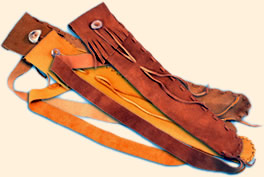
Hand crafted from top grain hides. They have a shoulder strap making
them comfortable to carry the flutes on hikes. The closure is an antler
button. The small bag is designed for the smaller-sized such as Sparrow
Hawk "A" flute, Whitetail Hawk "B" flute and the
Merlin "C" flute. The large bag is just right for the "G,"
"F#" and "D" flutes.
SOFT BAGS
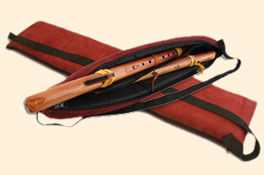
This Flute Bag is on the top of our list of protective cases. Its unique design includes complete lining with 1″ foam padding sewn into all sides. It has a center divider that provides the protection to carry two flutes in the case. The bag is made from plush suede cloth and uses an industrial quality zipper for secure closure. This case is light weight (less than 1 pound), insulates against heat & cold, is ideal for traveling and has a carrying strap. Unlike top opening cases the side zipper allows the fetish to stay in its proper position during the process of taking the flute in and out. Ideal for your valuable instruments.
This come in two sizes: the medium size for flutes up to 57 cm long or the large size which fits flutes up to 72 cm long.
CLOTH BAGS
Available in three sizes, felted cloth flute bags are an economical protection for the instruments. They have cord ties that close the opening securing the flute in the bag.
The small bag is 24" long and 4" wide, sized for Kestrel, Merlin, Sparrow Hawk and Whitetail Hawk flutes. The large bag is 30" long and 4.5" wide, sized for Golden Eagle and Redtail Hawk flutes. The extra large bag is 31" long and 5" wide: its extra width makes it ideal for our Condor Bass flutes.
FLUTE BAGS
This attractive Flute Bag is made with a double layer. For added protection the inside is padded quilting cloth and the outside is Suede Cloth. The shoulder strap makes it ideal to include the flute in outdoor activities and the horn button latches the flap securely.
BOOKS - DVDs - CDs
DVD "HOW TO PLAY"
Beginning Flute DVD with Odell Borg
Odell Borg's half-hour-plus DVD of beginning techniques. Even if you've never picked up a musical instrument before, this video will get you producing sweet sounds from your Native American flute.
DVD "INTERMEDIATE INSTRUCTION"
Advanced Flute DVD with Odell Borg - 70-minute-long
We all get stuck playing the same flute phrase or song over & over again. In this Intermediate level DVD, Odell shows ways of varying the playing style and utilizing new techniques to enhance your flute experience. It is divided into chapters so you can easily jump to a particular lesson.
SONG BOOK
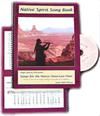
Odell Borg's Native Spirit Song Book with CD
A collection of 21 songs written in Native Flute Tablature and Finger Tablature, so everyone will be able to play these songs. Twenty of the songs are Native American songs from various tribal backgrounds plus "Amazing Grace".
Included is a "Play Along" CD for the songs. All the songs on the CD are played in the keys of "A", "G" and "F#". This book is easy to use and provides a great tool to vary one's playing style. The special LayFlat binding can be opened & pressed flat without damage to the binding.
De Indische bamboefluit, ook bansuri
genoemd, is een uit één stuk bamboe vervaardigde dwarsfluit.
De bansuri telt 6 of 7 gaten. Alle halve noten, accidentals en microtones
worden verkregen door een unieke vingertechniek. De bansuri is één
van de oudste muziekinstrumenten. Er werd reeds van de bansuri melding
gemaakt in de Vedas. De bansuri is geassocieerd met de god van dans
en muziek: Krishna.
De bansuri - 'bans' betekent
bamboe en 'swar, shruti, shri, suri' betekent toon - is een bas fluit gemaakt
van bamboe met 6 of 7 open vingergaten. De bansuri is een eenvoudig
wind instrument zonder kleppen, met een toon ongeveer een oktaaf lager
dan de Europese klassieke fluit en ze is veel meer resonant en flexibel
in" tonal quality". Ze heeft geen kleppen voor "b" of "#" maar de halve- en kwartnoten worden verkregen door voorzichtig slechts een deeltje van het gat met de vinger te openen.
CONCERT BANSURI PREMIUM
The hallmarks of quality are the precision of tuning and the sound, resonance and durability of the bamboo. Our premium bansuris are carefully selected concert instruments for demanding musicians. They are made from precious himalaya bamboo, which gives them a unique combination of warmth, softness and clarity. They are tuned to a = 440 Hertz and have exact intonation in all octaves.
Our flute maker Anand Dhotre from Mumbai has learnt his art from his father and cooperates regularly with leading Indian bansuri masters. He is himself a musician and a personal student of master flutist Ronu Majumdar.
ARCHITECTURE & PLAYING TECHNIQUE
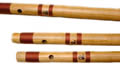
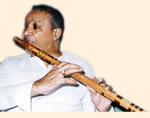
The bansuri is a hollow bamboo tube which is closed at the upper end. It has six to seven finger holes and one blow hole. Usually it has several tight thread bindings to prevent it from cracking. It is blown sideways like the Western flute. Fully closing or opening the finger holes produces a diatonic scale. Half opening of the finger holes produces the half notes in between, thus enabling bansuri performers to play any note combination derived from the chromatic scale. Instead of using the fingertips the finger joints are used to cover the holes. That way it is possible to grab even the long deep bansuris commonly used for classical solo performance. Smooth sliding of the fingers produces the glissando movements and microintervals so essential to Indian music. The tonic note Sa is produced by fully closing the first three finger holes. The lowest note is reached by closing all six fingerholes and is a fourth below the tonic Sa. India Instruments usually mentions both the tonic Sa and the lowest note in order to avoid any misunderstandings.
QUALITY
The hallmarks of quality are the precision of tuning and the sound, resonance and durability of the bamboo. India Instruments carries standard bansuris as well as professional ones (called premium) from India. The standard bansuris often have a beautiful tone and a bamboo of decent quality. However many of them are not tuned according to Western pitch and they are sometimes slightly out of tune in the second and third octave. Our premium bansuris are carefully selected instruments for professional musicians in any field. They are made of high quality bamboo from the foothills of the Himalayas, which produces a unique combination of clarity, warmth and smoothness in tone. Our bansuri maker has learnt his art from his father and works in close cooperation with leading Indian bansuri performers. The premium bansuris are hand-picked for us by an independant bansuri player, who checks each instrument for sound quality and intonation. If you are ever unsatisfied with the tuning of one of our premium bansuris we will adjust it individually according to your specifications without extra charge.
BANSURI MAINTENANCE Bansuris (Indian bamboo flutes), unlike Western silver flutes, do not need any specific maintenance - as long as they are played regularly and kept in a relatively moist climate. E.g. it is unnecessary to wipe the inside after playing.
However, if the bamboo gets too dry, it might crack. Therefore never keep a bansuri in a hot dry place (e.g. a car) for any length of time. If that has happened by accident (and the instrument has yet survived it...) it is important to start playing the bansuri again very carefully - otherwise the inside might swell due to its sudden exposure to the moisture of the breath and thus cause the bamboo to crack.
Some people treat the inside of their bansuris with oil in order to smoothen the surface and thus create a slightly clearer sound. The oil has to be very fluid and free from resin. In India it is common to use mustard oil. Slightly warm the oil to approx. body temperature, apply it to the inside of the bansuri and let it soak for about 30 minutes. Afterwards wipe the bansuri clean again. This procedure can be repeated twice a week for two weeks in a row.
The Hulusi is a free reed wind instrument from China. It is held vertically and has three bamboo pipes which pass through a decorated gourd or woorden mouth piece. The center pipe has finger holes and the outer one or two are typically drone pipes.
Quite often the reference note of an instrument in Asia is the note you get when the lowest three fingerholes are open.
XIAO - DONGXIAO - CHINESE SHAKUHACHI - CHINESE
VERTICAL BAMBOO FLUTE
listen
to theXiao
The Xiao, or Chinese shakuhachi,
is made of bamboo and originated over 2000 years ago. It was some time
during the Tang and Sung Dynasty when the vertically-played instruments
were categorized as Xiao and those horizontally-played as Dizi. The
Xiao is not only a unique solo instrument but is also used widely in
ensembles and for accompanying purposes. Its mellow tone quality makes
it most suitable for playing lyrical melodies.
This Chinese reed instrument looks like
a normal side blown bamboo flute, but has a copper
reed in the square mouth piece. Its shape is similar to that
of the Xiao. The sound is somewhat between a flute and a harmonica.
This is an instrument of south minority cultures, brought into use in 1960s. With only 9 tones, it produces mellow and charming sounds. The BaHu
is popular among the Miao, the Hani, the Yi, the Tai and other minority
groups in the Yunnan province of China.
There goes such a beautiful story. Two young Hanis fell in love with each other. One day a demon grabbed the girl, cut off her tongue, then threw her into the deep mountains. Following a bird's advice that bamboo can talk, she made an instrument with that stuff, pouring out her misfortune through it. On hearing her sad voice, the villagers came to kill the demon and relieved the girl. Since then the bawu has became a talking instrument. Its dimensions vary and so do the designs.
Here is a beautiful song "The Greeting",
composed and played by my good friend Steve on BaHu
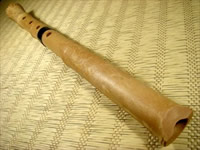
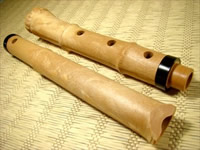
The shakuhachi is a testament to the elegance
of traditional Japanese culture. Made from the root of the bamboo,
its aesthetic is organic and simple. Hidden inside this rustic
form, however, is a bore that is carefully crafted with the utmost
precision. This instrument produces a sound that is said to replicate
the full range of natural life on earth.
The shakuhachi is an end-blown flute tuned to
a pentatonic (5-note) scale. By various fingerings -- half- and
quarter-holings -- and by controlling the angle of mouthpiece
against the lip, all twelve tones of the western chromatic scale
can be produced. The mouthpiece consists of an oblique blowing
edge whose design is unique in that it enables the player to control
the pitch produced by changing the angle at which the flute is
being blown. This, in turn, produces a delicate change of intonation
-- a swelling or bending of notes characteristic of the traditional
music. Alterations in embouchure, intensity of blowing and cross
fingerings allow the player to create a wide variety of subtle
and incredible sounds. The timbre of the instrument is mellow
in its low tones, although it is equally capable of producing
loud, penetrating and breathy tones in its middle and upper registers.
Little can be said of the sound of the shakuhachi without first
hearing its hauntingly beautiful ring. With this in mind, noted
ethnomusicologist Fumio Koizumi concluded: "Because of the
religious origin of its music, the sound of the bamboo flute leads
the mind directly into spiritual thought. Thus a single tone of
the shakuhachi can sometimes bring one to the world of Nirvana."
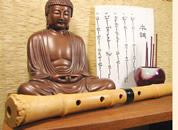
The origin of the shakuhachi, according to one
theory, has been traced back as far as ancient Egypt and is presumed
to have migrated through India and China before entering Japan
in the Sixth Century. Its popularity, however, was short-lived
and it wasn't until the Thirteenth Century that it was revived
by the Fuke sect of Buddhism which sought to replace sutra chanting
with sui zen or "blowing zen." Not until the Edo Period
(1603-1867) did this instrument reach its final and most decisive
phase of development. During this era, marked by the disintegration
of feudal Japan, the shakuhachi was favored by swelling numbers
of uprooted samurai warriors (ronin) who joined the ranks of itinerant
preachers known as komuso ("Priests of Emptiness and Nothingness").
The komuso wore large baskets (tengai) over their heads to symbolize
their detachment from the world. Violent clan struggles which
marked the late Sixteenth Century forced some of the komuso to
organize themselves into a society for self-protection.
SHAKUHACHI YUU
'Yuu' - At Ease, Calm, Serene, Composed, Victorious and Eternal
The shakuhachi flute is an ancient instrument; known and appreciated for its mystical sound and expressiveness. Originally, the shakuhachi was used as a spiritual tool to relax the mind and body. Today, the shakuhachi is used for this same meditative purpose and for playing a wide variety of modern music as well. Designed by a world famous Japanese musician in 1976, the 1.8 size Shakuhachi Yuu is a quality, well tuned instrument, available at an affordable price for anyone who wants to play shakuhachi. With its precision bore design, the Shakuhachi Yuu plays easily, with a clear, bright and confident tone. The Yuu has good sound quality, accurate musical intervals, and excellent tonal balance throughout the entire musical scale.
The Shakuhachi Yuu is a perfect student shakuhachi for beginning players who want to experience the shakuhachi without spending a lot of money. There are also many advanced shakuhachi players and teachers around the world who enjoy having a Yuu in their collection as well.
One of the best things about the ABS Resin Shakuhachi Yuu is that it does not require maintenance like bamboo! You can take this flute with you wherever you go—traveling to foreign countries, hiking, backpacking, to the beach or desert—all without the slightest fear of the instrument being damaged. The Shakuhachi Yuu will withstand any weather conditions, you can even play it in your bath or in a hot tub under the stars! The Shakuhachi Yuu feels very similar to professional bamboo instruments in terms of its size, shape, and weight. It is extremely rugged in its construction and disassembles easily for travel. Please do not let the fact that the Shakuhachi Yuu is made from ABS plastic resin fool you or turn you away from owning one. The Shakuhachi Yuu is an excellent instrument, endorsed by numerous teachers and players, and the Yuu performs as well as some of the more expensive professional bamboo shakuhachi!
For those who may be interested, the production of the Shakuhachi Yuu is a collaboration between the engineer of the ABS Resin construction and a professional bamboo shakuhachi tuner. After the first stages of production, the Shakuhachi Yuu is cut to size and the utaguchi or blowing edge is crafted. And finally, the insides of the five holes on the Yuu are crafted and fine tuned.
Easy-to-play flutes. They have only one hole which allows the player through overblowing, like with a Slovakian Fujara, to reach a series of overtones up to 6 octaves. You can make a third base tone through closing the big opening at the end of the flute, creating a lively and virtuous sound.
A Basic Musical Phenomenon - play - discover - learn
The overtone flute is an old scandinavian instrument that has influenced the folk music in many places by its special sound and scale. You can also find this flute in other countries like Hungary. You can regulate the tone height in two different ways. the first possibility - which gave name to the flute - is to vary the blowing intensity in a weak or strong manner. If you blow softly, you will receive a very low tone which is the fundamental tone of the flute, when you blow more intensively, higher tones will spring up in the rising scale and a so called overtone or natural tone scale will result. The position of the tones in the scale depends on the length of the flute. To make it easier to hit the desired note, begin blowing with a little ”t”- sound.
Another possibility of tone variation is to alternately close and open the orifice. When you cover the orifice, you will find that the tone rises or sinks to a position in the above mentioned scale between two tones. This will happen without taking into consideration the momentary position of the tone. Thereby the number of tones can be doubled. The same quantity of tones can be received again by putting a finger into the orifice of the flute. Then the tone rises up against half a tonestep, related to the above described interface tone on condition that the orifice is well covered.
The tones can also be "stretched" by gradually opening and closing the hole. The fact that the melodies are made by varying the blowing intensity has a unique healing effect on the breathing functions and by that on the whole human being.
Overtone flutes in bamboo
Our overtone flutes made of bamboo are easy to play.
These harmonic flutes have a warm to breathy sound.
They are available in several keynote variants.
Overtone flutes in copper
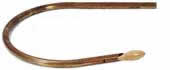
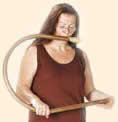
This is a bended copper overtone flute
with a mouthpiece made of beech, in which a labium is included. It
is played horizontally, but it is blown like a recorder. It has no
finger holes. The pitch is fixed by the power of the breath and the
opening and closing of the ending. Sounds very close to a
Slovakian Fujara.
Our Moseño flutes are handmade in Portugal using bamboo grown and processed in Europe. Our master instrument maker learned the art of Andean flute making in Bolivia. His great love of our manufacturer for this flute is reflected in the absolutely high-quality workmanship and the clean tuning, down to the smallest detail. This Moseño is tuned diatonically and ranges slightly over two octaves. Like the South American originals, each instrument is unique in form and colour. Their light, meditative sound seems to carry the weight of life and relaxes the soul.
For the Aymara Peoples, the traditional spiritual value of the Moseño extends in an unbroken line from past to present. The recent cross-cultural exchange of Indigenous instruments has the potential to spark new traditions amongst new groups of people. For example, understanding that the sound of the Moseño is linked to nuptial rites, a music-loving couple might decide to arrange to have this flute played at their wedding.
This Moseño is made of polished, flamed bamboo. It comes with a simple fabric bag as shown on the image.
Tuning: C major diatonic
Origin: Portugal
Material: Bamboo
Length approx. 66.0 cm (26.0")
Diameter approx. 4.0 cm (1.6")
listen to theMaui Xaphoon "C" (taken from the CD "Indigo", by Kristalan)
listen to theMaui Xaphoon "C" (taken from a soundjourney by myself and Mieke Polfliet back in 2008)
Introducing the Maui Xaphoon (pronounced
“za foon”), a "Bamboo Sax" for everyone who appreciates
awesome sound but doesn’t want to schlep around a bulky instrument.
The Xaphoon’s sound falls somewhere between a saxophone and a
clarinet – a much richer sound than its size would suggest --
and was born to be played wherever and whenever the mood strikes.
The experienced player will find the Xaphoon capable of all the subtle
shadings and vibrant power of a saxophone. The beginner will find
it fun and easy, and good practice for other reed instruments.
The Xaphoons are hand-made
of Bamboo, cut from the rain forests of East Maui by the instrument's
creator. A tenor saxophone reed, affixed to a built-in mouthpiece,
is responsible for the instrument's unique sound. They are available
in the keys of C and Bb, with recently added D, Es & G, possess
a 2-octave, fully chromatic scale. The Xaphoon could become one of
your most treasured belongings.
Handmade from bamboo, with great care and attention
to details, each instrument is unique. Comes in a box, with a mouth
piece protector, songbook and fingering chart.
MAUI XAPHOON "D": De Hawaiaanse bamboesaxofoon, gestemd in D, intens handwerk, ieder stuk is uniek, lengte 30cm
"One inch shorter than the "C" Xaphoon, this handy instrument is ideal for those who wish to follow the Celtic crowd, and play along with violins, pennywhistles, and guitars (as these instruments tend to play songs in the keys of "D" and "G")".
MAUI XAPHOON "C": De originele Hawaiaanse bamboesaxofoon, gestemd in C, 8 noten, intens handwerk, ieder stuk is uniek, lengte 34cm
"This handmade Xaphoon is our most popular bamboo model. Made under the direct supervision of Brian Wittman (fresh from the rainforests of Maui, Hawaii), it boasts a 2 full octaves with a fully chromatic scale. Comes with 8-page hand-caligrified instruction guide and an aura of "coolness" that is off the scale! "
MAUI XAPHOON "Bb": De originele Hawaiaanse bamboesaxofoon, gestemd in Bb, 8 noten, intens handwerk, ieder stuk is uniek, lengte 36cm
"Handmade in Hawaii under the direct supervision of the instrument's inventor, the Bb Xaphoon is ideal for jazz pro's and amateurs alike! About an inch longer than the "C" instrument, and each note plays one whole step lower, so it sounds even more like a saxophone in the right environment. Recommended for advanced players and for those who already "think" in Bb".
MAUI XAPHOON "A": De originele Hawaiaanse bamboesaxofoon, gestemd in A, 8 noten, intens handwerk, ieder stuk is uniek, lengte 39cm
XAPHOON DE CATALUNYA"C": This new "Catalunya" has been made in sunny Spain by a renowned instrument builder who is using the finest woods for this instrument: Oak and Almond wood. All are hardwoods that have been used for many years by flutemakers for producing excellent solo instruments.
A well-priced alternative made out
of the same material as the clarinet mouthpieces is the C-Sax. They
sound more sharp and can also be washed and cleaned. Comes in a box,
with a mouth piece protector, songbook and fingering chart.
STANDARD
XAPHOON "C": De "pocket" saxofoon,
ABS, gestemd in C, 8 noten, zelfde design als MAUI
XAPHOON "C",
lengte 35 cm
"Our most popular Xaphoon! An inexpensive
alternative to the handmade original. The Pocket Sax is made of
indestructible ABS plastic - just put the cap on, throw it in
your backpack, and go! Now the tiny instrument with the awesome
sound has an additional care-free dimension".
Accessories for the Xaphoon
NEPALESE
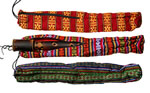
XAPHOON BAGS: Show off your character and worldly taste with these custom Xaphoon cases, handmade in Nepal! Many colorful patterns encase and protect your valuable instrument whether it's in C or D. (Not all Bb instruments will fit...) Comes with a belt loop with a zipper seal.
Imagine being able to create a sense of community wherever you are - at a bus stop, in a cave, waiting in line, even a parking garage! The Xaphoon is about two octaves lower than conventional flutes of the same length. Play it in an acoustic space and it will sound like a full-sized saxophone. Make friends while making spiritual music!
Music
is the bridge between people and culture. The Xaphoon was
developed as an instrument to carry along with you. So play
the Xaphoon wherever you are and greet those, who don't understand
your language, with your Xaphoon music.
Tibetaans boeddhisme
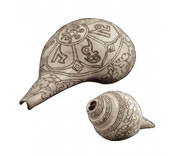
De trompetschelp wordt in het algemeen gebruikt om 'op te roepen tot godsdienstige bijeenkomsten'. Ook wordt hij gebruikt om 'heilig water' in te bewaren, en als muziekinstrument tijdens puja-ceremonieën.
Wat is een puja?
Puja (letterlijk vertaald: offerande brengen) is een ritueel bij meditaties op een van de Bodhisattva's of Boeddha's. Een ceremonie waarbij gebeden worden gericht aan de Boeddha's om hun zegen of hulp. Er zijn verschillende soorten puja's, voor diverse doeleinden in ons leven. Er zijn puja's voor meditatiebeoefening, zuivering, wegnemen van obstakels, lang leven, sterven, ziekte, zakendoen en zo voort. Puja's worden uitgevoerd om de drie vormen van obstakels af te wenden en op te ruimen, toestanden die ons weerhouden van het bereiken van onze wereldse en geestelijke doelen.
India
De trompetschelp wordt gebruikt om kwade geesten uit te drijven en natuurrampen te voorkomen. Sommigen gebruiken hem zelfs om 'giftige schepsels te verjagen'. En deze schelp wordt dus ook gebruikt bij puja's.
Feng Shui
De trompetschelp neemt een belangrijke plek in bij de feng shui, want er worden allerlei goede eigenschappen aan toegedicht: een gevoel van vrede en comfort in huis, alsook bescherming. Volgens de feng shui werkt het plaatsen van een dergelijke schelp in de zuidhoek van de woonkamer als versterker van de populariteit en reputatie van de bewoner. Leg gladde trompetschelpen in de keuken om energie te creëren die harmonieus en gezinsvriendelijk werkt. Houd stekelige schelpen op de vensterbank om energie aan te trekken die het huis beschermt tegen ongeluk en schade. Bewaar steeds wat trompetschelpen in een mandje op een tafel bij de voordeur, voor een succesvolle en bevredigende loopbaan.
Rituele schelp met oneindige knoop - Pujaschelp
De trompetschelp speelt een voorname rol in het Tibetaanse boeddhisme, het hindoeïsme en de feng shui (de leer van het harmonisch arrangeren en inrichten van woon- of werkplek).
Rituele witte trompetschelp Om Mani Padme Hung gegraveerde decoratie
De trompetschelp speelt een voorname rol in het Tibetaanse boeddhisme, het hindoeïsme en de feng shui (de leer van het harmonisch arrangeren en inrichten van woon- of werkplek).
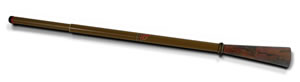
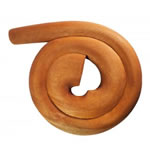
This budget-friendly didgeridoo is very lightweighted and has a full warm sound.
Length 130cm
listen to the Didgeridoo in PVC
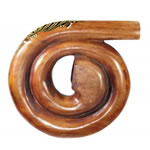
Slide-Didgeridoos
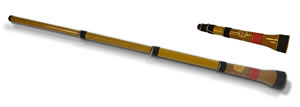
The Slide-Didgeridoo is an exciting
spin on the didgeridoo that allows players to change pitch while playing!
It is easy to play, light, compact, durable and inexpensive!
We highly recommend the Slide-Didgeridoo to beginner and advanced players alike.
Beginners can try out different keys to help get their first tone. There
is also excellent backpressure for learning to circular breathe. It
has exceptional vocals and full range harmonics for an intense sound.
Advanced players will love the sound quality and versatility of being
able to match pitch with anyone's didgeridoo.
Slide-Didgeridoo
Travel Slide-Didgeridoo
Carbon Slide-Didgeridoo
Fiberglass Didgeridoo
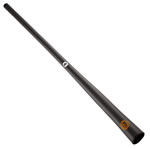
Resonant, easy to play, and good for players of all levels my Artist Series Didgeridoo has unique design features giving it incredible playability. Designed for speed playing and warmth of tone this instrument is a guaranteed win for those looking for a quality didgeridoo.
Premium Fiberglass
154cm (61")
Color grey
Tuned in F
Didgehorn Mahogany
This Didgehorn is made of mahogany solid wood and is treated with linseed oil.
It has full sound and allows the percussive playing style.











)
)
)
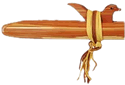






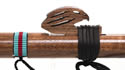
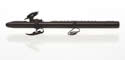
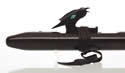
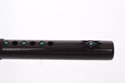
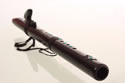
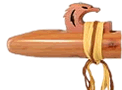



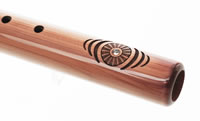 An instrument known as a CymaScope can project the physical geometric patterns of any specific vibration. Our EarthTone© Flutes are engraved with the geometric pattern of the 432 Hz frequency.
)
)
)






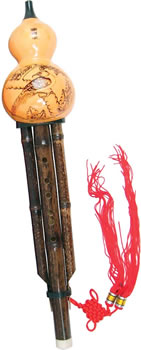
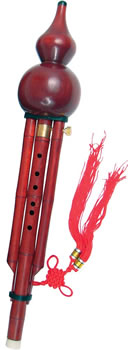
 The Hulusi is a free reed wind instrument from China. It is held vertically and has three bamboo pipes which pass through a decorated gourd or woorden mouth piece. The center pipe has finger holes and the outer one or two are typically drone pipes.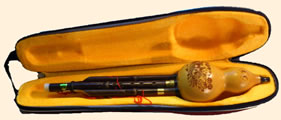



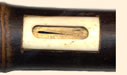 This Chinese reed instrument looks like
a normal side blown bamboo flute, but has a copper
reed in the square mouth piece. Its shape is similar to that
of the Xiao. The sound is somewhat between a flute and a harmonica.
This is an instrument of south minority cultures, brought into use in 1960s. With only 9 tones, it produces mellow and charming sounds. The BaHu
is popular among the Miao, the Hani, the Yi, the Tai and other minority
groups in the Yunnan province of China.
This Chinese reed instrument looks like
a normal side blown bamboo flute, but has a copper
reed in the square mouth piece. Its shape is similar to that
of the Xiao. The sound is somewhat between a flute and a harmonica.
This is an instrument of south minority cultures, brought into use in 1960s. With only 9 tones, it produces mellow and charming sounds. The BaHu
is popular among the Miao, the Hani, the Yi, the Tai and other minority
groups in the Yunnan province of China. TRADITIONAL SHAKUHACHI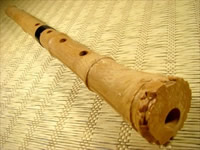

 Overtone flutes in copper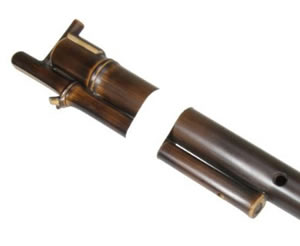
 the Bolivian Moseño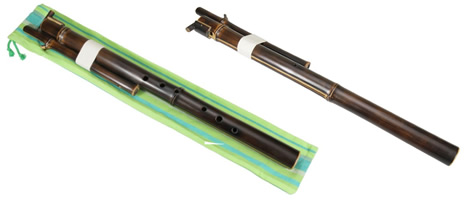
)
)


 Tibetaans boeddhisme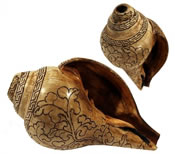

)



)
)
)
)
)
)
)
)
)
)